
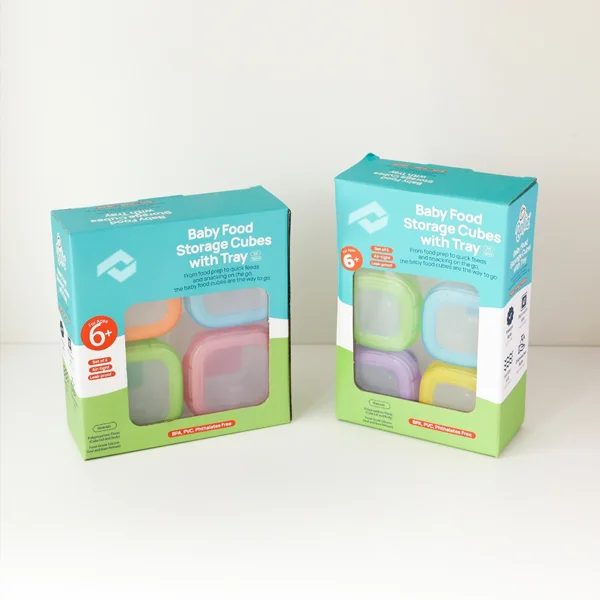
Baby products come in many forms, from soft clothing and feeding bottles to toys, lotions, shampoos, and skincare items. Each product has different packaging requirements based on its size, material, intended use, and storage conditions. A clothing set may fit comfortably in a paperboard box, while bottles and liquid products may need additional support to prevent movement or leakage during handling.
Custom baby product packaging allows businesses to select suitable box styles, materials, inserts, and printed designs for different product categories. The packaging can keep items organized, present important information clearly, and create a consistent appearance across a baby product range. However, the design should always consider the needs of parents and caregivers, who often look for clear labeling, convenient opening, and practical storage.
Why Custom Baby Product Packaging Matters
Packaging plays an important role in how baby products are stored, displayed, and delivered. Retail customers may compare several similar products before making a purchase, while online shoppers depend on product images and descriptions to understand what they are buying.
A suitable package helps identify the product and keeps its contents organized. It can also make it easier for retailers to display different sizes, colors, or product variations.
Baby product packaging should balance appearance with practicality. Decorative elements may support a brand’s visual identity, but they should not make essential product information difficult to read. Clear product names, age recommendations where applicable, quantities, care instructions, and usage details can help customers make informed decisions.
Custom Packaging for Baby Toys
Baby toys include rattles, stacking cups, plush animals, teething toys, activity sets, and other products designed for different developmental stages. Their shapes and sizes vary considerably, so packaging should be selected according to the specific item.
Boxes for Different Toy Shapes
Small toys can often be packed in compact cartons, while larger toys may require wider boxes or stronger packaging structures. Sets containing multiple pieces may benefit from compartments that keep the contents arranged.
The package should provide enough space for the toy without allowing unnecessary movement. This is particularly useful when products have delicate decorative elements or several components that could become disorganized during delivery.
Windows for Toy Visibility
A clear window can allow customers to see the toy without opening the box. This may be useful for plush toys, colorful building sets, and products where the appearance is an important purchasing consideration.
Window placement should match the product’s position inside the package. The opening should also be designed so that the packaging remains suitable for its intended retail and shipping conditions.
For products intended for infants and young children, businesses should carefully assess all packaging components. Small detachable pieces, loose films, ties, and other elements may present hazards if accessible to children. Packaging should not be treated as a toy, and relevant safety requirements should be reviewed before production.
Custom Baby Bottle Packaging
Feeding bottles, bottle accessories, and related products need packaging that accounts for their shape, material, and quantity. Glass bottles require different handling considerations from lightweight plastic bottles, while multi-piece feeding sets may include nipples, caps, brushes, or additional accessories.
Inserts for Secure Bottle Placement
A suitable insert can help hold bottles in position and reduce contact between individual items. For a set containing several bottles, dividers can create separate spaces and make the contents easier to organize.
Paperboard and corrugated inserts may be appropriate for some products, depending on their weight and fragility. The insert should fit the bottle dimensions and allow the package to close without putting unnecessary pressure on the contents.
Packaging for Bottle Sets
Businesses selling feeding kits can use a single box with designated spaces for each component. This arrangement helps customers identify the included items without having to search through a loosely packed package.
Product details should remain easy to find. Depending on the item, the packaging may need to communicate capacity, material information, cleaning guidance, included accessories, and relevant usage instructions. Any claims about food contact or material safety should be accurate and supported by appropriate product documentation.
Custom Packaging for Baby Clothing
Baby clothing includes bodysuits, sleepsuits, socks, hats, blankets, bibs, and seasonal outfits. These products are usually lightweight, but their packaging still needs to keep them clean, folded, and organized.
Folding and Arranging Clothing
A compact paperboard box can work well for clothing sets, gift outfits, or premium garments. Tissue paper or a simple internal support can help maintain the arrangement when the package is opened.
For everyday clothing, paper sleeves, cartons, or lightweight bags may be more practical than rigid boxes. The best format depends on the retail environment, the number of garments, and whether the product is sold individually or as part of a set.
Packaging for Clothing Gifts
Baby showers, birthdays, and newborn celebrations create demand for clothing gift sets. Packaging can group matching items together, such as a bodysuit, hat, socks, and blanket.
A coordinated design helps customers understand that the items belong to one set. The box should also be large enough to accommodate the folded garments without compressing them excessively.
When clothing is packaged with ribbons, decorative ties, or other accessories, these components should be assessed for suitability around infants and young children.
Custom Packaging for Baby Skincare Products
Baby skincare products may include lotions, creams, oils, shampoos, washes, and moisturizers. These items often use bottles, tubes, jars, or pump containers, each with different packaging requirements.
Boxes for Bottles, Tubes, and Jars
A folding carton can provide an outer layer for a skincare container while offering space for printed product information. Taller cartons may suit shampoo bottles, while smaller boxes can accommodate cream jars or tubes.
The internal dimensions should account for the container’s height, width, cap, and any pump mechanism. If the product is sold with several accessories, an insert may help keep the components in place.
Managing Leakage and Product Information
Outer packaging can help keep skincare items organized, but it should not replace a properly designed and tested primary container. Caps, seals, pumps, and closures need to be suitable for the product’s contents and expected handling conditions.
Labels should clearly identify the product and provide relevant directions, ingredients, quantity, warnings, and storage information where applicable. Businesses should verify the labeling rules for their product type and sales market, especially when making claims about sensitive skin, allergies, or specific benefits.
Choosing Materials for Baby Product Packaging
Material selection depends on the weight, shape, fragility, and intended use of the product. A package for soft clothing does not need the same structure as one containing glass bottles or several toy components.
Paperboard
Paperboard is commonly used for retail cartons and lightweight product boxes. Its smooth surface supports printed text, illustrations, product details, and color-coded designs.
It may be suitable for baby clothing, small toys, skincare cartons, and certain accessory sets when the package does not require heavy-duty protection.
Corrugated Cardboard
Corrugated cardboard offers additional cushioning and structural strength for shipping or heavier products. It can be useful for larger toy sets, multi-item bundles, and outer shipping cartons.
The required grade and thickness depend on product weight, package dimensions, stacking conditions, and the expected shipping environment.
Kraft Packaging
Kraft paper and board provide a natural-looking option for brands that prefer a simple visual style. They may work well for clothing, gift sets, and selected accessories.
Businesses should check the material’s strength, surface quality, and suitability for the intended printing process before choosing it for a complete product line.
Recycled and Recyclable Materials
Recycled paperboard and other recyclable materials may help reduce reliance on virgin resources when selected appropriately. However, recyclability depends on the material composition, coatings, adhesives, local collection systems, and recycling facilities.
Claims such as recyclable or environmentally friendly should be specific and accurate. Product protection and applicable safety requirements must remain part of the material selection process.
Choosing the Right Size and Box Structure
An appropriate package should fit the product while leaving enough room for any necessary inserts or protective components. Excessive empty space can allow products to move, while a tight fit may place pressure on containers, clothing, or toy components.
Before finalizing dimensions, businesses should measure the actual product, including caps, handles, accessories, and other parts that affect its overall size.
Different packaging structures serve different purposes. Tuck-end cartons are useful for many lightweight retail products, while mailer boxes may suit direct-to-consumer orders. Larger or heavier product sets may need a stronger box style.
For a brand selling several product categories, using a small range of standard box sizes can simplify storage and ordering. Individual products can still have distinct labels or printed designs while sharing compatible packaging formats.
Organizing Multiple Products With Inserts
Baby gift sets often contain products with different shapes and dimensions. A box might include clothing, a feeding bottle, a soft toy, and a skincare item in one package.
An insert can separate these items and prevent them from shifting during handling. It can also create a more organized arrangement when the customer opens the box.
The insert material should suit the contents and the intended use. Paperboard dividers may work for lightweight products, while more substantial supports may be needed for fragile containers. Each component should be tested inside the finished package to confirm that the box closes properly and the contents remain in place.
Creating a Consistent Brand Appearance
Baby product packaging often uses soft colors, simple illustrations, and clear typography, although the right design depends on the brand and its target audience. Some companies prefer playful graphics, while others use minimal layouts with a focus on product details.
A consistent design system can connect different product categories. For example, a brand may use the same logo placement and typography across its toy boxes, clothing cartons, feeding bottle packaging, and skincare boxes.
Color variations, product names, and category labels can help distinguish individual items without making the overall range look unrelated. Clear contrast between text and background is also important, particularly for small labels and product instructions.
Packaging for Retail Shelves and Online Orders
Retail packaging should make products easy to identify and arrange. Compact boxes can help stores organize similar items, while windows may be useful when customers need to see the contents before purchasing.
Online orders create additional requirements. The retail package may need to fit inside an outer shipping carton with suitable protective material. Fragile bottles and glass containers may require more careful packing than folded clothing or soft toys.
Businesses should test the complete shipping setup rather than evaluating the retail box alone. A package that looks good on a shelf may still need additional protection for courier handling.
Testing Baby Product Packaging Before Production
Testing samples before ordering in large quantities can reveal problems that are difficult to identify from a digital design. Place the actual product inside the box and check the fit, closure, insert placement, readability, and ease of opening.
For products containing liquid, fragile containers, or multiple components, testing should reflect realistic storage and delivery conditions. Businesses should also inspect printed details to ensure that required information remains readable at the final production size.
If the packaging is intended for products used by infants, review the relevant safety and labeling requirements before approving the final design. Testing and compliance checks should be completed before mass production, not after the packaging has reached retailers.
Final Thoughts
Custom baby product packaging needs to account for the differences between toys, feeding bottles, clothing, and skincare products. Each category has its own requirements for size, material, internal organization, product information, and handling.
A practical packaging system begins with accurate product measurements and a clear understanding of how the item will be stored, displayed, and delivered. Appropriate materials, well-fitted inserts, readable labels, and consistent design elements can help businesses create packaging that serves both retailers and customers.
By testing samples and reviewing applicable safety requirements before production, businesses can reduce packaging problems and create a more organized presentation across their baby product collections.
Leave a Reply